


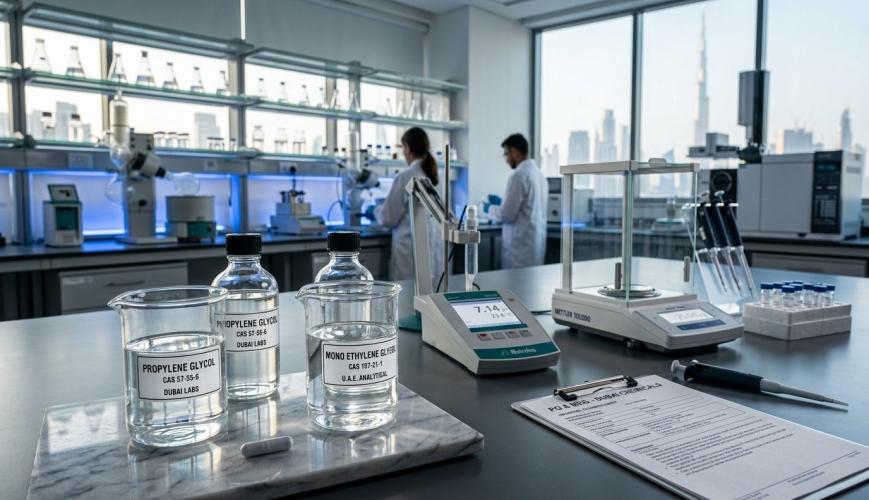
When a buyer asks for "glycol" for a chiller, coolant or process loop, the real decision is between mono ethylene glycol (MEG) and propylene glycol (PG). They look the same, mix with water the same way and protect against freezing in similar amounts. They differ in cost, thickness, toxicity and where the law and common sense allow them. This guide helps plant managers in Umm Al Quwain, Sharjah, Ajman and across the UAE make the choice.
Side by side
| Mono ethylene glycol (MEG) | Propylene glycol (PG) | |
|---|---|---|
| Toxicity | Poisonous if swallowed | Low toxicity, food and USP grades available |
| Heat transfer | Better, lower viscosity | Slightly lower, thicker when cold |
| Cost | Lower | Higher |
| Freeze protection (50% in water) | About -37 C | About -33 C |
| Typical use | Industrial chillers, engines, process cooling, polyester resin | Food and drink plants, pharma, cosmetics, safer HVAC loops |
The freeze points are approximate values for a 50 percent mix with water. Real systems use much less glycol, and the correct figure comes from the equipment maker.
Choose MEG when
- The loop is closed and no leak can reach food, drinking water or people.
- You want the best heat transfer for the lowest running cost.
- You are making polyester resin, PET or similar polymers (MEG is the raw material).
- You are running engines, generators or marine cooling systems that call for an ethylene glycol coolant.
Choose propylene glycol when
- The fluid could contact food, drink or a pharmaceutical product, even by accident.
- You supply cosmetics, flavours, vaping liquids or personal-care products (food or USP grade needed).
- Your site policy or a customer audit requires a non-toxic heat transfer fluid.
- Staff will handle the fluid often, in a location where spills are hard to control.
Check the grade, not just the name
"MEG" and "PG" cover several grades. Fibre grade MEG used for polyester is very pure, while industrial MEG for coolants is cheaper and sold with corrosion inhibitors added. For propylene glycol, the technical grade is fine for industrial loops, while food-contact work calls for an IP, USP or food grade, and the paperwork to prove it. Ask for the certificate of analysis.
Three practical tips
- Mix with demineralised water. Mineral salts in tap water reduce corrosion protection.
- Do not mix glycol types in one system. Flush before switching.
- Measure concentration yearly with a refractometer. A glycol loop that has gradually diluted will not protect you.
Supply from Dubi Chem Marine International
We supply ethylene glycol, mono ethylene glycol in 30 kg packs and propylene glycol from our Fujairah stock, with delivery across the UAE, including Umm Al Quwain. Tell us the application and quantity and we will quote the right grade. Call +971 56 108 1115 or use the contact page. For a wider look at glycols and their uses, see the glycol supplier guide for Umm Al Quwain.
Frequently asked questions
Can I switch from MEG to PG?
Yes, but drain, flush and refill the system, because mixed fluids can cause foaming and inhibitor problems. Expect a slightly higher pumping load.
Is PG more expensive in every case?
Usually, though prices move with the market. We quote both so you can compare.
How long does glycol last?
Inhibited glycol often lasts years in a clean, closed loop, but it needs testing. Dark colour, acidity or sludge mean it needs replacing.