

A colourless to pale yellow transparent liquid, available as 98% DEHA and also as 85% solution in water. Di Ethyl Hydroxyl Amine (DEHA) is versatile products use for Controlling the corrosion inhibitor, Photographic etc.
DEHA – Diethylhydroxylamine for Water Treatment
Chemical Name: N,N-Diethylhydroxylamine (DEHA) CAS Number: 3710-84-7 Molecular Formula: C₄H₁₁NO Molecular Weight: 89.14 g/mol Product Category: Boiler Water Treatment / Oxygen Scavenger / Corrosion Inhibitor
Product Description
DEHA (Diethylhydroxylamine) is an organic, volatile oxygen scavenger widely used in industrial boiler water-treatment systems to control dissolved oxygen and minimize oxygen-induced corrosion.
DEHA reacts with dissolved oxygen in boiler feedwater and helps protect boiler internals, feedwater lines and condensate return systems.
Unlike conventional sodium sulfite oxygen scavengers, DEHA does not introduce dissolved inorganic salts into boiler water. This makes it useful in appropriately designed high-pressure boiler treatment programs where controlling dissolved solids is important.
It is use for Water Treatment Chemical, Corrosion Inhibitor, Polymerization, Photographic Chemicals, Decolourisation, etc.
DEHA used as a volatile oxygen scavenger and reacts in a ratio of 2.8/1 DEHA/O2.
RXSOL Product DEHA
RXSOL DEHA Oxygen Scavenger 25%
DEHA-based liquid oxygen scavenger for boiler feedwater treatment, dissolved oxygen control, metal passivation and steam-condensate corrosion protection.
DEHA Oxygen Scavenger, Diethylhydroxylamine Water Treatment, Boiler Oxygen Scavenger, DEHA 25% Solution, Volatile Oxygen Scavenger, Boiler Feedwater Corrosion Inhibitor, DEHA Chemical Supplier India UAE Oman.
Recommended Dosage
|
Parameter |
Typical Starting Guidance |
|---|---|
|
Theoretical DEHA requirement |
1.24 ppm per 1 ppm O₂ |
|
Practical active DEHA dosage |
2–3 ppm per 1 ppm O₂ |
|
DEHA residual target |
Often 0.5–1.0 ppm, program-dependent |
|
Recommended injection point |
Deaerator storage section or feedwater line |
|
Dosage control |
Dissolved oxygen and DEHA residual testing |
Application Area of DEHA :
Water Treatment , Polymerization, Photographic Chemicals, Decolourisation , Inhibitors, Silicon Rubber
Example Dosage Calculation
For boiler feedwater containing 0.1 ppm dissolved oxygen:
-
Feedwater volume: 10,000 litres
-
Dissolved oxygen: 0.1 mg/L
-
Practical starting dosage: 3 mg active DEHA per mg O₂
-
Required active DEHA: 3 grams
-
Required 25% DEHA solution: 12 grams
This is an illustrative oxygen-demand calculation, excluding any additional requirement for maintaining the specified DEHA residual.
One important formulation question: Are you planning to manufacture DEHA 25% solution, DEHA 85%
HOW TO MANUFACTURE 25% DEHA SOLUTION?
Manufacturing Formulation – DEHA 25% Solution
For manufacturing a 100 kg batch of a simple aqueous DEHA oxygen scavenger:
|
Raw Material |
Quantity |
|---|---|
|
DEHA 85% |
29.41 kg |
|
Demineralized Water |
70.59 kg |
|
Total |
100.00 kg |
Manufacturing Procedure
-
Charge approximately 60 kg demineralized water into a clean, compatible mixing vessel.
-
Start gentle agitation.
-
Slowly add 29.41 kg of DEHA 85% under controlled conditions.
-
Add the remaining demineralized water to reach 100 kg total.
-
Mix until the solution is homogeneous.
-
Verify DEHA concentration using a validated analytical method.
-
Pack in compatible, tightly sealed containers.
Use suitable ventilation, protective equipment and temperature control. Confirm the current DEHA SDS before manufacturing.
This is an uncatalyzed 25% active DEHA solution, not a validated proprietary boiler-treatment formulation.
Similarly follow the above step for 50% and 85% DEHA.
Storage :
Can be stored and handled in equipment made of stainless steel of Type SS304 or SS316 or steel lined with glass, polypropylene or polyethylene. Storage in mild steel equipment or containers is not recommended. DEHA drums should be stored in a cool and well ventillated area, away from sources of ignition.
Packing :
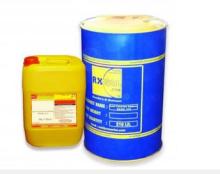
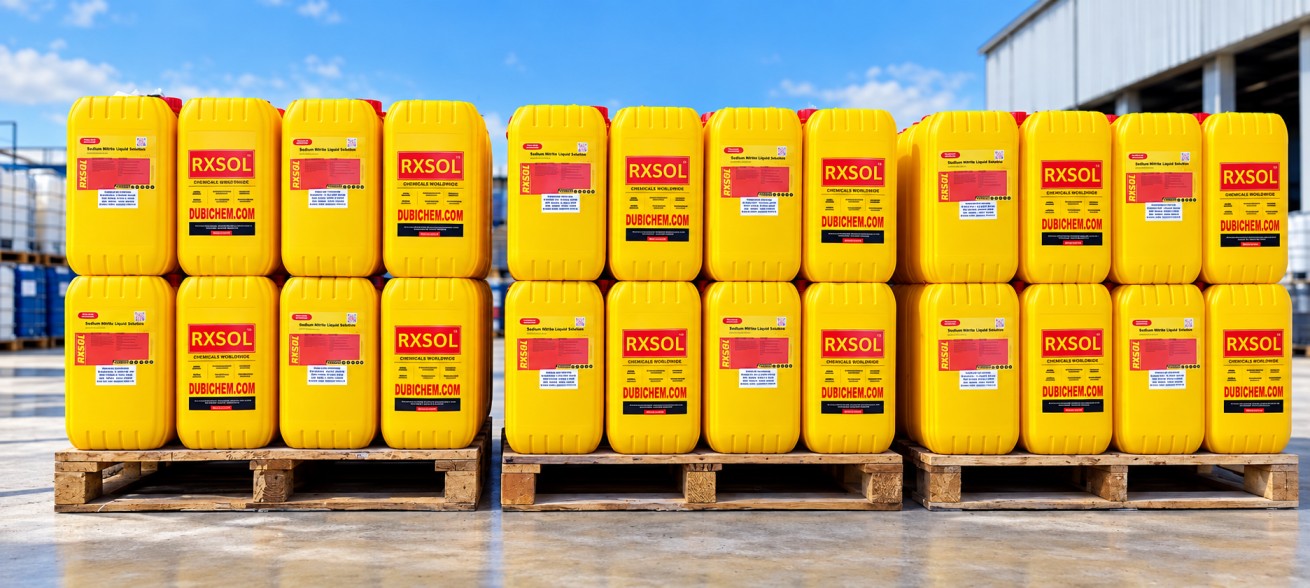
25 Ltrs, 210 Ltrs. in new UN approved HMHDPE drums / In ISO Tanks of 20 Mt's capacity.
Health & Safety :
DEHA is irritating to skin,eyes and the mucous membrane. In case of contact,affected area to be washed with plenty of water for atleast 15 minutes. In case of inhalation,victim should be moved to fresh air and oxygen should be administered. In case of ingestion,victim should be made to consume copious quantity of milk and water. Medical advice should be sought at once. Personal protective equipment should always be used while handling.
Physical Properties
| Empirical Formula | C4H11NO | |
| Molecular Wt | 89.1 | |
| DEHA 98% | DEHA 85% | |
| Sp. Gr. at 20°C | 0.855 - 0.875 | 0.895 - 0.905 |
| Refractive Index | 1.418 - 1.420 | 1.418 - 1.420 |
| Boiling Point | 124 to 126°C | 94 to 96°C |
| Freezing Point | -25 to -27°C | Below 0°C |
| Flash Point (Closed C) | Below 45°C | 45 to 47°C |
| Solubility in water | Soluble | Soluble |
| pH | 10.2 | 10 |
Specification :
| Specification | DEHA 98% | DEHA 85% |
| Purity as DEHA (wt. %) | 98.00 min. | 85.00 min. |
| Water Content (% by wt.) | -- | 15.00 max |
| Ethylamines (% by wt.) | 0.5 max. | 0.05 max. |
Typical Technical Specifications
|
Parameter |
Typical Value |
|---|---|
|
Appearance |
Clear, colourless to pale yellow liquid |
|
Chemical Name |
N,N-Diethylhydroxylamine |
|
CAS Number |
3710-84-7 |
|
Molecular Formula |
C₄H₁₁NO |
|
Active Concentration |
85% DEHA or formulated aqueous solutions |
|
Molecular Weight |
89.14 g/mol |
|
Solubility |
Miscible with water |
|
Function |
Oxygen scavenging and corrosion control |
|
Application |
Boiler feedwater and steam-condensate systems |
These specifications are indicative. Commercial DEHA oxygen scavengers are available at different active concentrations, including diluted boiler-treatment formulations.
Diethylhydroxylamine (DEHA) is an organic compound with the formula (C2H5)2NOH. It is a colorless liquid, although it is usually encountered as a solution. It is mainly used as an oxygen scavenger in water treatment. It is a volatile oxygen scavenger and reacts in a ratio of 2.8/1 DEHA/O2. It is employed in high pressure (>70 bar) boiler systems due to a very low rate of reaction at low temperatures and pressures. Due to its volatility, it acts as an oxygen scavenger throughout the entire boiler system due to steam carryover. DEHA also reacts with ferrous metals to form a passivized film of magnetite throughout the boiler system.
Comparison of DEHA vs Sodium Sulfite
|
Parameter |
DEHA |
Sodium Sulfite |
|---|---|---|
|
Oxygen Scavenging |
Yes |
Yes |
|
Adds inorganic dissolved solids |
No |
Yes |
|
Steam/condensate protection |
Yes, through volatile treatment action |
Limited |
|
Metal passivation |
Yes |
Limited |
|
Typical application |
Selected medium/high-pressure systems |
Low/medium-pressure systems |
|
Relative chemical cost |
Generally higher |
Generally lower |

WATER TREATMENT
DEHA is used in Water Treatment Chemical Formulations for controlling corrosion in boiler very effectively due to its property of oxygen scavenging. It scores over conventional hydrazine hydrate since it is far less toxic and meets the standard for disposal of blow offs without any difficulty giving a good protection against corrosion at the same time.
• POLYMERIZATION
DEHA's powerful free radical scavenging ability coupled with its moderate volatility and relatively low order of acute toxicity makes it an ideal "popcorn Polymer "/ vapour phase inhibitor for olefins or styrene monomer storage & recovery system. Because of its capability of inhibiting polymerization in the gas phase, DEHA is finding use as an in-process inhibitor for the production of styrene, divinylbenzene, butadiene, isoprene and other monomers containing a reactive double bond.
• PHOTOGRAPHIC CHEMICALS
DEHA has reducing property, so it is used as an auxiliary chemical photographic developer for instant colour photos. Also, DEHA is effective in stabilization of image and in the prevention of discolouration.
• DECOLOURISATION
Phenol and Phenolic antioxidants can be decolourised with DEHA.
• INHIBITORS
DEHA can be used as a colour stabiliser of monoalkyl phenol.
• SILICON RUBBER
DEHA can be used as a raw material for the hardener of the Silicon Sealant and coating agent.
Application Area :
Water Treatment :
DEHA is used in Water Treatment Chemical Formulations for controlling corrosion in boiler very effectively due to its property of oxygen scavenging.It scoresover conventional hydrazine hydrate since it is far less toxic and meets the standard for disposal of blow offs without any difficulty giving a good protection against corrosion at the same time.
Polymerization:
DEHA's powerful free radical scavenging ability coupled with its moderate volatility and relatively low order of acute toxicity makes it an ideal "popcorn Polymer "/ vapour phase inhibitor for olefins or styrene monomer storage & recovery system.Because of its capability of inhibiting polymerization in the gas phase, DEHA is finding use as an in-process inhibitor for the production of styrene, divinylbenzene, butadiene, isoprene and other monomers containing a reactive double bond.
Photographic Chemicals:
DEHA has reducing property, so it is used as an auxiliary chemical photographic developer for instant colour photos. Also, DEHA is effective in stabilization of image and in the prevention of discolouration.
Decolourisation : Phenol and Phenolic antioxidants can be decolourised with DEHA.
Inhibitors: DEHA can be used as a colour stabiliser of monoalkyl phenol.
Silicon Rubber: DEHA can be used as a raw material for the hardener of the Silicon Sealant and coating agent.
Why DEHA used as Oxygen Scavender in High Pressure Boiler?
DEHA It is employed in high pressure (>70 bar) Boiler systems due to a very low rate of reaction at low temperatures and pressures.
DEHA Mechanism of Oxygen Removal
DEHA reacts with dissolved oxygen according to the simplified reaction:
The theoretical requirement is approximately 1.24 mg of pure DEHA per mg of dissolved oxygen.
In practical boiler operation, approximately 2–3 mg of active DEHA per mg of dissolved oxygen may be used as an initial dosing basis, with adjustments for residual requirements and system conditions.
Diethyl Hydroxyl Amine N,N- DEHA exporter and supplier in India UAE Middle East Oman Kenya Africa. DEHA supplier in Mumbai, Kandla Surat Gujrat, Kolkata, West Bengal, Chennai Tamilnadu, Visakhapatnam, Andhra Pradesh, Dubai, Fujairah, Abudhabi, Sharjah, Ajman, Muscat Barka Sohar, Nairobi Kenya Sudan, Yemen Tanzania Africa
Frequently Asked Questions
Q1. What is the main function of DEHA in water treatment?
DEHA removes residual dissolved oxygen from boiler feedwater and supports corrosion control in boiler and steam-condensate systems.
Q2. Is DEHA better than sodium sulfite?
DEHA is advantageous where low dissolved-solids addition and volatile condensate protection are required. Sodium sulfite can be more economical and reacts faster under many low-pressure boiler conditions.
Q3. Can DEHA replace hydrazine?
DEHA is used as an alternative in suitable boiler-treatment programs. However, it is not a universal drop-in replacement; dosage, reaction kinetics and thermal decomposition must be considered.
Q4. Can DEHA be used in cooling towers?
DEHA is primarily intended for boiler and closed-system oxygen control. It is generally not economical for open cooling towers because continuous atmospheric oxygen replenishment creates high chemical demand.
Q5. Does DEHA increase boiler TDS?
DEHA does not introduce inorganic salts like sodium sulfite, although its reaction and decomposition products can affect water chemistry and conductivity.
Q6. Does DEHA protect condensate pipelines?
Yes. DEHA and certain decomposition products can provide corrosion-control benefits in steam-condensate systems.
Q7. Is DEHA suitable for all high-pressure boilers?
No. Suitability depends on operating pressure, temperature, metallurgy, steam purity requirements and boiler manufacturer recommendations. DEHA may decompose at elevated temperatures, producing amines and other compounds.
Q8. Can DEHA be used in food-processing boilers?
Only after confirming the applicable regulatory permissions, steam-contact requirements and chemical supplier documentation. Do not assume suitability for culinary or direct food-contact steam.
#DEHA_supplierMUMBAIdubaiOman
#DiethylHydroxylAmine_supplierUAEdubai
#DEHA_muscatOMAN
#NNDEHA_abudhabi
#DEHA_kenyaNAIROBI
N,N-DIETHYLHYDROXYLAMINE DEHA, N-Ethyl-N-Hydroxy-Ethanamine