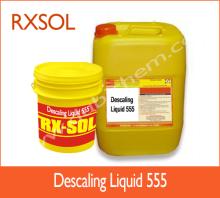


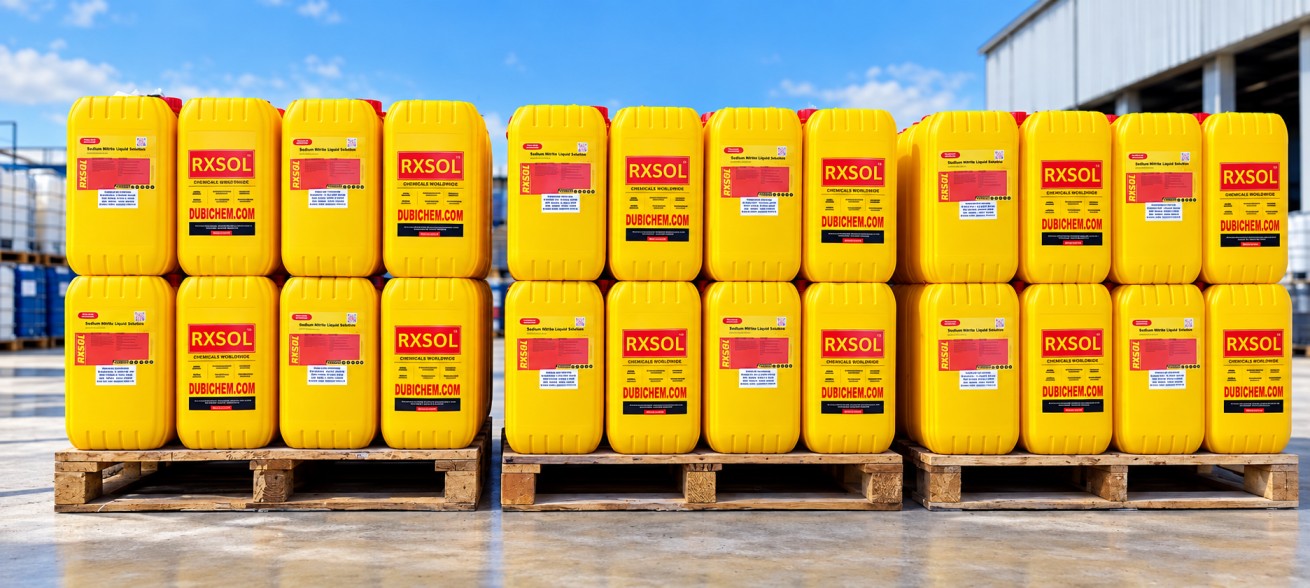
Newly developed antifoam for seawater distillation plants.
Product Description
RXSOL PPG-Based Defoamer is a non-silicone, polyether-based foam control additive designed for oil and gas hydraulic fracturing operations.
The product is intended to suppress unwanted foam generated during the preparation, mixing, pumping and handling of hydraulic fracturing fluids.
It is particularly suitable for evaluation in water-based fracturing systems containing surfactants, friction reducers and other chemical additives.
The product rapidly collapses existing foam while providing extended foam suppression in seawater streams containing natural organic matter, algae-derived surfactants, hydrocarbons, biological contaminants, and suspended solids. The combination of fast-acting antifoam component and persistent foam-control properties of the polymerised glycol ether delivers both immediate knockdown and long-lasting antifoam performance.
The product is designed for continuous or intermittent injection into seawater make-up lines to minimize operational problems associated with foaming in desalination plants.
The foaming tendency of seawater in distillation plants is unpredictable. It is generally thought that foam is formed when organic compounds are concentrated in the brine, giving rise to surface active effects which increase the liquid film strength at phase interfaces. Antifoam Defoamer AF10 is not soluble in water. At use concentrations (0.05 - 0.1 mg/l) Antifoam Defoamer AF10 forms a micro-emulsion and during evaporation is incorporated into the surface liquid film of bubbles where it acts as a surfactant and reduces the film strength. The result is that the film readily ruptures and a stable foam does not form. In this way a uniform boiling or flashing action is achieved and carry-over is minimised.
Where to use ANTIFOAM AF10 for foam knockdown?
- Reverse Osmosis (RO) Plants
- Multi-Stage Flash (MSF) Plants
- Multi-Effect Distillation (MED) Plants
- Hybrid Desalination Facilities
- Intake Channels
- Seawater Make-up Lines
- Pumping Stations
- Equalization Basins
- Clarifiers
- Dissolved Air Flotation (DAF) Units
- Pretreatment Systems
- Power Plant Cooling Water Intakes
- Refinery Seawater Systems
- Petrochemical Facilities
- Offshore Platforms
- LNG Terminals
Suggested Dosage for Fracturing Fluids
For initial laboratory screening:
|
Application |
Trial Dosage |
|---|---|
|
Low-foaming freshwater systems |
25–50 ppm |
|
Surfactant-containing slickwater |
50–100 ppm |
|
High-TDS brine systems |
100–200 ppm |
|
Severe foaming |
Determine by dose-response testing |
These are proposed screening concentrations, not verified field dosage recommendations. A comparable commercial brine defoamer uses low-volume dosages but has a different silicone-based chemistry.
Suggested 100 kg Manufacturing Formulation
The following is a laboratory-development starting formulation, not a field-qualified commercial recipe.
|
Raw Material |
Quantity (kg) |
Function |
|---|---|---|
|
Polypropylene Glycol PPG-2000 |
55.0 |
Primary foam-control agent |
|
Polypropylene Glycol PPG-4000 |
20.0 |
Foam suppression and persistence |
|
EO/PO Block Copolymer, low-foam grade |
15.0 |
Secondary foam-control agent |
|
Dipropylene Glycol |
10.0 |
Carrier and viscosity adjustment |
|
Total |
100.0 |
The exact EO/PO grade is critical because some polyether products promote foaming rather than suppress it. PPG is also used for other purposes in fracturing fluids, so its presence alone does not establish defoaming performance.
- Add 50% - 70% of required distillate volume into dosing tank;
- Start the dosing tank agitator/mixer;
- Add the required Antifoam Defoamer AF10 volume into the dosing tank;
- Add the remaining volume of distillate to give the required concentration of Antifoam Defoamer AF10 solution;
- Continue agitation for a further 10 - 15 minutes;
- The resulting emulsion will be stable and will not normally separate
The dose level required will depend on the quality of the seawater feed (e.g. dissolved organics, suspended solids) but is typically found to be in the range 0.05 to 0.1 mg/l and is subject to optimisation as operating experience is gained. Dose level is not dependent on operating temperature of the distillation plant. Recommended injection points are either into the seawater make-up line after any external de-aeration and decarbonation equipment, or into the recycle brine stream at a suitable point after the blowdown and typically into the discharge of the recycle brine pump.
General-purpose antifoams have a wide range of applicability, but not all of them are suitable for use in the treatment. Some foam control agents can aggravate the problem. Foam control in gas scrubbers is only one of the process parameters to be monitored. It is equally important to prevent or slow the fouling of the unit, because dismantling of the gas-scrubbing units is manually intensive. Incorrectly specified antifoams can easily lead to increased fouling and clogging, particularly in the heat exchangers. Momentive Performance Materials RXSOL antifoams are designed to provide foam control with a minimum of such problems.
Dosing for Desalination plants/aqueous systems
- Organic loading
- Algal concentration
- Turbulence level
- Intake water quality
- Seasonal variations
| Application Condition | Recommended Dosage |
|---|---|
| Normal Operation | 0.5 - 5 ppm |
| Moderate Foaming | 2 - 10 ppm |
| Severe Foaming | 5 - 20 ppm |
| Shock Treatment | 10 - 50 ppm |
Key Features and Benefits
- Quick foam knockdown - particularly useful when foam suddenly builds up in the absorber and rapid control is needed.
- Excellent stability at high temperatures - because of their excellent dispersibility. Antifoam Defoamer AF10 do not show a propensity to deposit on heat exchangers as many other antifoams tend to. Instead, they remain finely dispersed in the amine or glycol solution and are eventually filtered out.
- Easy dilution and use - simple addition of water and minimum agitation is sufficient to dilute RXSOL-51-2066-220 antifoam emulsion to required concentrations. Pumping of the diluted emulsions is easy, due to their low viscosity.
- Reduced clogging or scaling in the heat exchangers - potentially resulting in less service maintenance.
- Low concentrations can provide effective foam control - RXSOL-51-2066-220 Antifoam Defoamer AF10 emulsion and often two to three times more effective than other antifoams used in treating units.
Product Safety, Handling and Storage
Customers should review the latest Material Safety Data Sheet (MSDS) and label for product safety information, safe handling instructions, personal protective equipment if necessary, and any special storage conditions required for safety. MSDS are available at www.rxmarine.com or, upon request, from any RX MARINE INTERNATIONAL representative. For product storage and handling procedures to maintain the product quality within our stated specifications, please review Certificates of Analysis, which are available in the Order Center.
Comarision to Antifoam Defoamer (Silicone based)
| Antifoam AF10 (RXSOL-51-2066) | Antifoam Defoamer (Silicon based) |
|---|---|
| Rapid dispersion | Moderate |
| Lower fouling tendency | Higher fouling risk |
| Easier dilution | Difficult |
| Better seawater compatibility | Good |
| Lower deposit formation | Moderate |
| Suitable for continuous dosing | Excellent |
Technical Specifications
Development targets only; not certified RXSOL product specifications.
|
Property |
Proposed Target |
|---|---|
|
Appearance |
Clear to slightly hazy liquid |
|
Colour |
Colourless to pale yellow |
|
Specific Gravity at 25°C |
0.98–1.05 |
|
Active Polyether Content |
90% nominal |
|
Water Solubility |
Grade-dependent; test dispersibility |
|
Silicone Content |
None intentionally added |
|
Viscosity |
Establish after pilot batch |
|
Storage Stability |
No separation under defined test conditions |
Low dose levels, typically in the range 0.05 to 0.1 mg/l in the seawater feed stream, depending on feed water quality. Activity is not dependent on temperature. No need to alter dose level if top brine temperature (TBT) changes. Negligible steam volatility and carry over into the distillate.
RXSOL-51-2066-220 is antifoam emulsion and its more concentrated antifoam emulsion. It has excellent candidates for controlling foam in amine and glycol dehydration units. This is suitable products for gas plants and have excellent stability in the presence of salts, resulting in reduced deposits on the plant’s equipment. RXSOL-51-2066-220 help preserves foam control under the severe conditions of a dehydrating unit. These conditions can remove water from other antifoam emulsions, rendering them immediately inactive.
Quality Control and Compatibility Testing
Before offering this product for hydraulic fracturing, evaluate:
-
Foam knockdown: Compare foam height before treatment and at 30, 60 and 120 seconds.
-
Foam prevention: Conduct a repeat-foaming test after treatment.
-
Brine compatibility: Test with the customer's actual freshwater, KCl brine or produced water.
-
Friction reducer compatibility: Verify that the product does not delay polyacrylamide hydration or reduce friction-reduction efficiency.
-
Fluid rheology: Check viscosity, gel development and breaker performance where applicable.
-
Formation compatibility: Evaluate residue, emulsion tendency, permeability damage and fluid recovery.
These compatibility checks are particularly important because hydraulic fracturing systems combine friction reducers, surfactants, clay stabilizers and other additives that can interact.
Recommendation for RXSOL Product Development
I would begin with the silicone-free PPG-2000/PPG-4000 formulation above, then compare it with a second version containing a purpose-designed low-foam EO/PO copolymer. Select the version that gives rapid foam collapse without affecting the customer's friction reducer.
#Antifoam_Defoamer
#Defoamer_ManufacturerSupplier
#Antifoam_for_Seawater_Distillation_Plants_in_UAE
#Antifoam_for_Seawater_Distillation_Plants_in_OMAN
#Antifoam_for_Seawater_Distillation_Plants_in_INDIA
#AntifoamM8ManufacturerinDubai
#AntifoamM8ManufacturerinSohar
- Instant foam collapse through modified polyol action.
- Long-term foam suppression through polymerised poly glycol ether technology.
- Rapid distribution throughout seawater systems.
- Immediate contact with foam-generating zones.
- Reduces re-formation of foam after treatment.
- Maintains stable process conditions.
- Minimizes overflow and air entrainment.
- Reduces process interruptions.
- Effective across a wide salinity range.
- Suitable for open seawater intake systems.
- Non-silicone formulation.
- Minimal risk of membrane fouling compared with conventional silicone antifoams.
- Suitable for automated dosing systems.
- Can be continuously injected using standard metering pumps.
Antifoam Defoamer Elite M8 manufacturer, exporter and supplier in India Mumbai, Kolkata, Chennai, Vizag, Gandhidham, Surat, UAE Middle East Dubai, Sharjah, Ajman, ABudhabi, Iraq, Kuwait, Oman Muscat Barka, Canada
What causes foam in aqueous systems like desalination plants?
- Algae and plankton
- Organic decomposition products
- Hydrocarbon contamination
- Biological activity
- Turbulent mixing and aeration
Quick foam knockdown plus extended foam prevention properties in RXSOL Antifoam AF10
| Parameter | Performance |
|---|---|
| Foam Knockdown Speed | Excellent |
| Foam Suppression Duration | Excellent |
| Seawater Compatibility | Excellent |
| Non-Silicone Performance | Excellent |
| Residue Formation | Very Low |
| Membrane Compatibility | Good |
| Continuous Dosing Suitability | Excellent |
PPG Polypropylene Glycol Based Defoamer