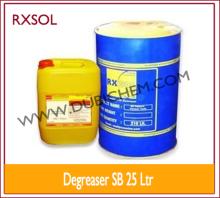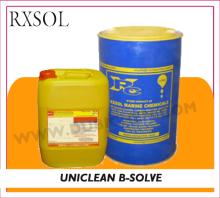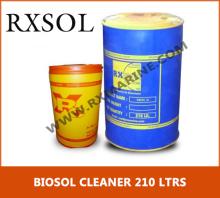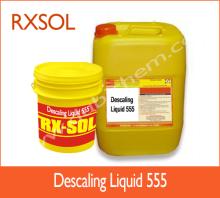


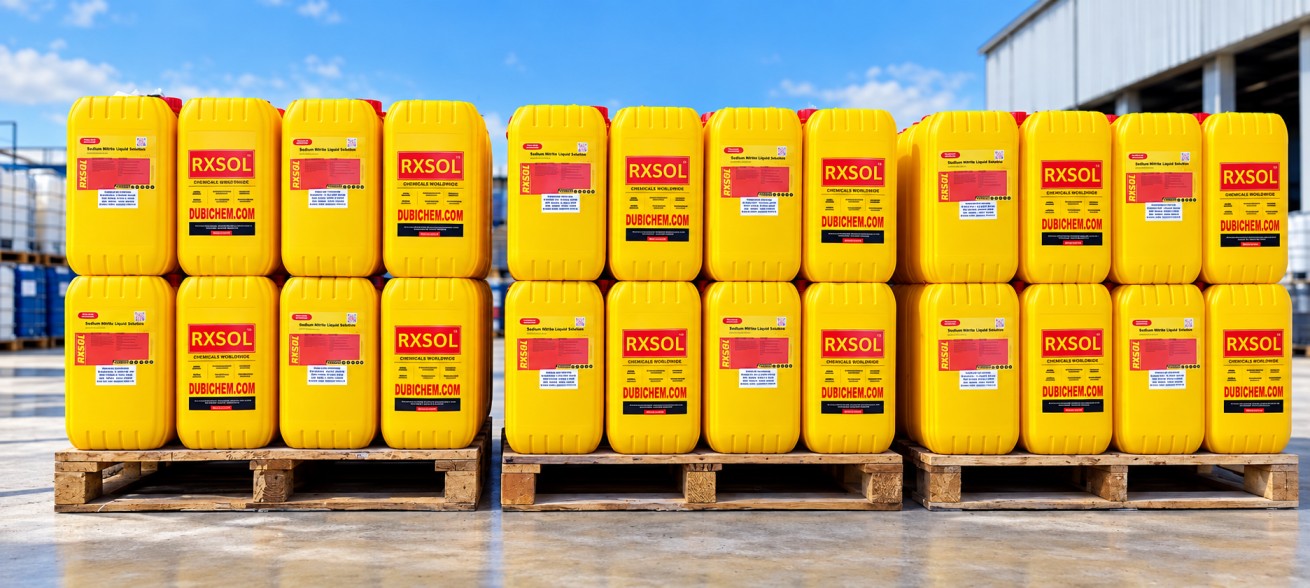
20, 25, 210 Ltr container available stock at Kolkata - Haldia, Mumbai - JNPT, KANDLA - Mundra, Visakhapatnam - Gangavaram, Ennore - Chennai, Fujairah - DUBAI, Sharjah, Abudhabi.
RXSOL Veg & Animal Oil Cleaner
Heavy Duty Alkaline Cleaner for Vegetable Oils, Animal Fats & Grease Deposits
Product Description
RXSOL Veg & Animal Oil Cleaner is a specially formulated, heavy-duty alkaline cleaning compound designed for the effective removal of vegetable oils, animal fats, edible oil residues, greasy deposits, and stubborn organic contamination from industrial surfaces.
The product combines powerful alkaline builders, emulsifying agents, surfactants, and dispersants to penetrate, emulsify, and remove hardened fatty deposits.
It is particularly suitable for cleaning cargo tanks, ship holds, food-processing equipment, storage tanks, pipelines, and industrial machinery contaminated with vegetable and animal oils.
A very strong cleaner, which can be used to soften up / remove baked on drying oils and also used after animal and vegetable oils, fish oils, tall oils, tung oil etc. It is low toxic product with an exceptional solvency power on soil & oily matter. It is free from Hydrocarbon solvents , Biodegradable and minimizes the extreme hazards to personnel in handling materials. For effective cleaning of animal and vegetable oils the first cleaning step is of utmost importance.
Applications
-
Marine Cargo Tank Cleaning: Removal of palm oil, soybean oil, sunflower oil, coconut oil, rapeseed oil, and animal fat residues.
-
Food Processing Industries: Cleaning of oil-processing equipment, tanks, and machinery.
-
Edible Oil Refineries: Removal of fatty deposits, oil films, and accumulated grease.
-
Industrial Degreasing: Cleaning of equipment, pipelines, floors, and storage vessels.
-
Ship Tank Cleaning: Removal of residual vegetable oils and animal fats following cargo discharge.
A very strong alkaline cleaner, which can be used to soften up / remove baked on drying oils and also used after animal and vegetable oils, fish oils, tall oils, tung oil etc. It is free hydrocarbon solvents.Gentle & suitable for tank cleaning operation.
Vegetable and Animal Oils (Cleaning Procedure)
1. Butterworth the tank with seawater or freshwater with a temperature 20°C. above the melting point of the product to be cleaned. After sufficient pre-cleaning of at least 1.5 hours the temperature can be increased. Drying and Semi-drying ProductsThese are oxidising products and through reaction with oxygen they will dry and harden. Tank cleaning should be executed as soon as possible after discharge. High temperatures (e.g. cleaning or steaming) and heated cargoes in adjacent tanks should be avoided.
2. Butterworth the tank with cold to warm seawater or freshwater.If the product has a higher melting point Butterworth the tank with seawater or freshwater with a temperature maximum 10°C above the melting point of the product. After sufficient pre-cleaning of at least 1.5 - 2 hours the temperature can be increased. Fatty Acids or vegetable/animal oils with high free fatty acid contentsee the cleaning suggestion of Fatty Acids.
3. If seawater was used in step 1 it is of utmost importance to flush/rinse the tank with freshwater before cleaning as per step 3 is continued.
4. (Final cleaning)Prepare the following solution (A) in freshwater (see table):
-
Solution A(emulsification) 0. 4 % RXSOL-20-2046-210 Butterworth the tank with the prepared solution for 1, 5-2, 0 hours by recirculation. The necessary temperature can be achieved / maintained by means of heating coils, cargo heat exchanger or Butterworth heater. Depending on the amount of product residues the solution can be used for 1 to 4 tanks.On some vegetable/animal oils it is recommended to saponify additionally the product residues (see
table): Therefore prepare one of the following solutions (B or C) in
freshwater (see table):
-
Solution B 0.4 % RXSOL-20-2046-210 plus 2.5% Potassium Hydroxide (KOH) or Sodium Hydroxide (NaOH)
- Solution C 0.4 % RXSOL-20-2046-210 plus 2 - 5% RXSOL AL 2005
5. continuedButterworth the tank with the prepared solution for 1, 5-2, 0 hours by recirculation. The necessary temperature can be achieved /maintained by means of heating coil (service tank) cargo heat exchanger or Butterworth heater.If RXSOL-20-2046-210 is used the cleaning temperature should be 60-70°C If Sodium or Potassium Hydroxide is used the cleaning temperature should be 60.C.If RXSOL-20-2046-210 Marine is used the cleaning temperature can be 70-80°C. Depending on the amount of product residues the solution can be used for 1 to 3 tanks.
6. Butterworth the tank 1 hour with hot seawater
7. Rinse the tank with fresh water
8. Inspect the tank; if white residues or a white film is present (calcium/magnesium soaps or carbonate) Butterworth the tank with one the following solution: 3-5% phosphoric acid and 0.4% RXSOL-20-2046-210 (stainless steel only); or 3-5% nitric acid and 0.4% RXSOL-20-2046-210 (stainless steel only); or 5-10% citric acid and 0,4% RXSOL-20-2046-210 (also suitable for Epoxy Coatings) or 2% RXSOL-16-1011-025 Marine and 0,4% RXSOL-20-2046-210 (also suitable for Epoxy Coatings) The cleaning temperature should be moderate (50°C.) Use heating coils not the Butterworth heater.
9. Flush the tank with fresh water
10.Ventilate, mop and dry the cargo tank.
Note: for vegetable oils which can be cleaned only by the RXSOL-20-2046-210 (Solution A) the final cleaning can be carried out by recirculation or byinjection (see method 3).
Recommended Cleaning Procedure
|
Cleaning Condition |
Concentration |
Temperature |
|---|---|---|
|
Light vegetable oil deposits |
2–3% |
40–50°C |
|
Heavy vegetable oil deposits |
3–5% |
50–70°C |
|
Animal fat and hardened grease |
5–10% |
60–75°C |
|
Cargo tank circulation cleaning |
2–5% |
55–70°C |
|
Manual cleaning |
5–10% |
Ambient to 50°C |
Procedure: Prepare the cleaning solution, circulate or spray onto contaminated surfaces, allow sufficient contact time, and rinse thoroughly with fresh water. Avoid allowing the cleaning solution to dry on surfaces.
For marine applications, confirm coating compatibility and cargo-specific cleaning requirements before use.
Vegetable oils can be cleaned by the recirculation or by injection method. Pl. refer below point of REMARKS
* Use a strainer at the pump stack when circulating any solution.*
Tank Lining – Stainless / Epoxy / Phenolic
Typical Technical Specifications
|
Parameter |
Typical Value |
|---|---|
|
Appearance |
Clear to pale yellow liquid |
|
Nature |
Strongly alkaline |
|
pH (1% solution) |
11.5–12.5 |
|
Specific Gravity at 25°C |
1.08–1.15 |
|
Solubility |
Completely miscible with water |
|
Foaming |
Moderate to high |
|
Cleaning Action |
Emulsification and saponification |
|
Recommended Dilution |
2–10% in water |
These are proposed formulation targets specifications.
Vegetable oils are divided in:
- Non-drying products
- Semi-drying products
- Drying products ( Sun Flower
-
Fatty acids Non Drying Products
Vegetable and Animal Oils (Cleaning Procedure)
1. Butterworth the tank with seawater or freshwater with a temperature 20°C. above the melting point of the product to be cleaned. After sufficient pre-cleaning of at least 1.5 hours the temperature can be increased. Drying and Semi-drying ProductsThese are oxidising products and through reaction with oxygen they will dry and harden. Tank cleaning should be executed as soon as possible after discharge. High temperatures (e.g. cleaning or steaming) and heated cargoes in adjacent tanks should be avoided.
2. Butterworth the tank with cold to warm seawater or freshwater.If the product has a higher melting point Butterworth the tank with seawater or freshwater with a temperature maximum 10°C above the melting point of the product. After sufficient pre-cleaning of at least 1.5 - 2 hours the temperature can be increased. Fatty Acids or vegetable/animal oils with high free fatty acid contentsee the cleaning suggestion of Fatty Acids.
3. If seawater was used in step 1 it is of utmost importance to flush/rinse the tank with freshwater before cleaning as per step 3 is continued.
4. (Final cleaning)Prepare the following solution (A) in freshwater (see table):
-
Solution A(emulsification) 0. 4 % RXSOL-20-2046-210 Butterworth the tank with the prepared solution for 1, 5-2, 0 hours by recirculation. The necessary temperature can be achieved / maintained by means of heating coils, cargo heat exchanger or Butterworth heater. Depending on the amount of product residues the solution can be used for 1 to 4 tanks.On some vegetable/animal oils it is recommended to saponify additionally the product residues (see
table): Therefore prepare one of the following solutions (B or C) in
freshwater (see table):
-
Solution B 0.4 % RXSOL-20-2046-210 plus 2.5% Potassium Hydroxide (KOH) or Sodium Hydroxide (NaOH)
- Solution C 0.4 % RXSOL-20-2046-210 plus 2 - 5% RXSOL AL 2005
5. continued Butterworth the tank with the prepared solution for 1, 5-2, 0 hours by recirculation. The necessary temperature can be achieved /maintained by means of heating coil (service tank) cargo heat exchanger or Butterworth heater.If RXSOL-20-2046-210 is used the cleaning temperature should be 60-70°C If Sodium or Potassium Hydroxide is used the cleaning temperature should be 60.C.If RXSOL-20-2046-210 Marine is used the cleaning temperature can be 70-80°C. Depending on the amount of product residues the solution can be used for 1 to 3 tanks.
6. Butterworth the tank 1 hour with hot seawater
7. Rinse the tank with fresh water
8. Inspect the tank; if white residues or a white film is present (calcium/magnesium soaps or carbonate) Butterworth the tank with one the following solution: 3-5% phosphoric acid and 0.4% RXSOL-20-2046-210 (stainless steel only); or 3-5% nitric acid and 0.4% RXSOL-20-2046-210 (stainless steel only); or 5-10% citric acid and 0,4% RXSOL-20-2046-210 (also suitable for Epoxy Coatings) or 2% RXSOL-16-1011-025 Marine and 0,4% RXSOL-20-2046-210 (also suitable for Epoxy Coatings) The cleaning temperature should be moderate (50°C.) Use heating coils not the Butterworth heater.
9. Flush the tank with fresh water
10.Ventilate, mop and dry the cargo tank.
Note: for vegetable oils which can be cleaned only by the RXSOL-20-2046-210 (Solution A) the final cleaning can be carried out by recirculation or byinjection (see method 3).

Remember
1st Point : We must initially wash these tanks with ambient seawater. Never try to use hot sea water, the palm oil will become hardened on the coating and it will not be possible to remove this from the coating.
2nd Point : On completion of oil discharging as soon as wash these tanks. If the terminal does not allow tank cleaning at berth, we can just introduce some water in the tank and recirculate it for few seconds in every few hours to keep the tank bulkheads moist.
In short terms Initially wash the tanks containing drying or semi-drying palm oils with ambient seawater (or fresh water) for 1-1.5 hours. And Keep the tank moist till the time tank cleaning is commenced.
Our Experience Shows that perfet cleaning can be achived by adopting 2 step cleaning method-
1st by applying Physical pressure Cleaning by using high pressure machine ( 8 - 9 Bar ) with cold water.
2ndly adopt Chemical cleaning of the tank, here again pl. note temperature plays very importan role during chemical tank cleaning.
Note : 1. Avoid high temperature during initial washing of drying and semi-drying palm oils
2. Avoid Caustic based chemicals which can make your tanks white if heated to higher temperatures.
3. Always Use fresh water for making the cleaning solution, uses of sea water entire heating coils have chances of hard solid salt deposits and salt deposits could become difficult to remove. But if uses of sea water for making the chemical solution is only option then during cleaning operation First, stop the steam in the heating coils at least 30 minutes before stopping recirculation. Finally rinse the tank with fresh water for 5-10 minutes immediately after chemical recirculation.
DRYING OILS.
CLEANING TIPS : PREWASH WITH COLD SEA WATER THEN MAIN WASH WITH HOT SEA WATER AND INJECT CAUSTIC POTASH LIQUID Based cleaner RXSOL-20-2046-210
CHINA WOOD OIL POPPYSEED OIL
CANDLE NUT OIL RUBBERSEED OIL
HEMPSEED OIL SAFFLOWER OIL
LINSEED OIL SOYA BEAN OIL
MENHADEN OIL TALL OIL
MUSTARDSEED OIL TUNG OIL
OTTICEA OIL WALNUT OIL
PERILLA OIL
SEMI-DRYING OILS.
Cleanig TIPS : PREWASH WITH COLD SEA WATER THEN MAIN WASH WITH HOT SEA WATER AND INJECT CAUSTIC POTASH LIQUID RXSOL-20-2046-210
BABASSU OIL COD OIL
CODLIVER OIL COTTONSEED OIL
CROTON OIL HERRING OIL
JAP FISH OIL MAIZE OIL
SARDINE OIL SESAME OIL
SHARK OIL SUNFLOWERSEED OIL
WHALE OIL WHEAT OIL
NON-DRYING OILS.
CLEANING TIPS : PREWASH WITH HOT SEA WATER THEN MAIN WASH WITH SEA WATER AND INJECT CAUSTIC POTASH BASED LIQUID RXSOL-20-2046-210
ALMOND OIL ARACHIS OIL (GROUNDNUT)
CAMPHOR OIL CANADA OIL
CARAPA OIL CHASHEW NUT OIL
CASTOR OIL COCONUT OIL
COHUNE OIL CURI CURI OIL
GERANIUM OIL LARD OIL (ANIMAL)
NEATSFOOT OIL OLIVE OIL
PALM OIL PINE OIL HOT
RAPESEED OIL (COLZA) RICE OIL
SEAL OIL SPERM OIL
TACUM OIL TALLOW OIL
TEA SEED OIL
Key Advantages
-
Effective against vegetable oils and animal fats.
-
Helps break down stubborn fatty deposits.
-
Suitable for hot-water circulation and spray cleaning.
-
Contains surfactants for improved oil emulsification.
-
Suitable for marine and industrial cleaning applications after compatibility testing.
Veg and Animal Oil Cleaner manufacturer and supplier in India, Middle East, Oman, Canada. We are also popular as Veg and Animal Oil Cleaner supplier in Mumbai, Gandhidham, Surat, Chennai, Visakhapatnam, Kolkata, Fujairah, Dubai, Ajman, Abudhabi, Muscat, Sohar, Oman Canada
One important question: Do you want this RXSOL Veg & Animal Oil Cleaner primarily for ship cargo tank cleaning after palm oil/vegetable oil discharge, or for industrial food-processing and edible-oil plant cleaning?
The formulation should be optimized differently for these two applications, particularly regarding foaming, alkalinity, and rinsing performance.
Palm oil Cleaner 210 Ltr