


RXSOL
• Chiller System Treatment
Maximize Cooling Efficiency. Prevent Corrosion. Control Scaling.
Complete water treatment solutions for chillers and cooling towers including scale & corrosion inhibitors, biocides, dispersants, algae control, closed-loop treatments, descalers, and cleaners designed to protect heat-transfer surfaces and maintain reliable system performance.
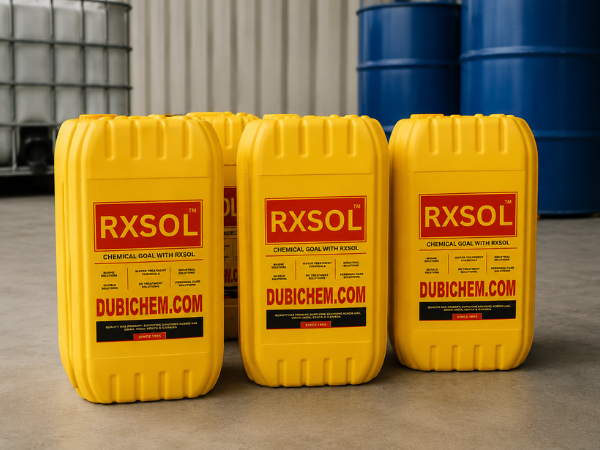
Key Products
Click a product to request a data sheet & pricing.
CorroShield L01 Corrosion Inhibitor
SKU:RXSOL-43-4020-032
A superior multifunctional, chemical treatment used for the control of corrosion in closed cooling systems and chilled water systems. It is a liquid product containing a combination of ferrous and non-ferrous corrosion inhibitors, a non-carbonate buffer, scale inhibitors, dispersants and a leak detection dye.
Corrosion Inhibitor Multi Metal Systems
SKU:RXSOL-40-4011-020
Formulated for multi-metal protection in closed and open recirculating water systems. It forms a stable, passive film on steel, copper, brass, and aluminum surfaces to prevent oxidation and pitting. The synergistic blend ensures long-lasting corrosion resistance.
Corrosion Inhibitor Open Close Systems
SKU:RXSOL-40-4022-025
A high performance, low toxicity cooling water corrosion inhibitor scientifically formulated for the treatment and protection of open and closed cooling water systems containing naturally soft or artificially soft water. Delivers superior results, protecting systems against the corrosion of steel, copper and brass, as well as containing an effective dispersant.
Micro Biocide Cooling Water
SKU:RXSOL-40-4009-025
A broad-spectrum non-oxidising organic biocide for chiller systems for the control of bacteria, fungi and algae. Premium product with cost-effective dosage guidelines.
Biocide
SKU:RXSOL-40-4008-020
A highly effective, broad-spectrum disinfectant that is both stable and safe. Oxidising nature and suitable for open recirculating systems.
HydroDisperse Polymer Dispersant
SKU:RXSOL-43-4003-230
A modified copolymer designed to deliver exceptional dispersion of fine and ultra-fine mineral slurries, while also functioning as an effective scale control agent in industrial water treatment systems.
Heat Transfer Liquid Inhibited
SKU:RXSOL-51-1586-210
Glycol inhibited with the corrosion inhibitor resulting corrosion protection, as well as efficient heat transfer, in water-based, closed-loop heating and air-conditioning systems.
Coolant Green G93-95
SKU:RXSOL-40-4021-025
Added to the cooling water of internal combustion engine as a coolant for excellent protection against cavitation and corrosion to all metals and alloys that are used in cooling systems.
Cooling Water Test Kit
SKU:RXSOL-62-5508-001
One kit for nitrite, chloride, hardness, and pH of chiller water systems.
How a Cooling Water Treatment Program Works
1) System Preparation
Clean and condition the system before treatment; ensure proper make-up water quality, filtration, circulation, and removal of existing scale, sludge, and deposits.
2) Scale & Corrosion Control
Choose the appropriated corrosion inhibitor and maintain the recommended inhibitor residual and water chemistry to control scale, corrosion, and mineral deposition on heat-transfer surfaces and piping.
3) Microbiological Control
Apply suitable oxidizing/non-oxidizing biocides and biodispersants to control bacteria, algae, fungi, slime, and biofilm that reduce heat-transfer efficiency.
4) Monitoring
Routine tests: pH, conductivity, hardness, alkalinity, chloride, inhibitor residual and microbiological activity; adjust blowdown, dosing, and cycles of concentration accordingly.
Maintenance Tips for Efficient, Safe Boilers
FAQs
Why is chemical water treatment necessary in cooling tower and chiller systems?
Cooling systems continuously concentrate dissolved minerals and are exposed to corrosion and microbiological contamination. A properly selected RXSOL treatment program helps control scale, corrosion, algae, bacteria, biofilm and fouling, maintaining efficient heat transfer and extending equipment life.
What are the main chemicals required for cooling tower maintenance?
A typical cooling tower program may include scale and corrosion inhibitors, oxidizing or non-oxidizing biocides, biodispersants, pH-control chemicals, antifoams and periodic cleaning/descaling chemicals. The exact RXSOL treatment program should be selected according to make-up water quality, metallurgy and operating conditions.
How can scale formation in a cooling tower or chiller condenser be prevented?
Scale can be controlled by maintaining suitable pH, cycles of concentration and blowdown, together with an appropriate RXSOL scale inhibitor. Regular monitoring of hardness, alkalinity, conductivity and silica helps identify scaling risk before deposits become severe.
Which RXSOL chemical should be used for cooling tower scale and corrosion control?
RXSOL offers Cool Water Treat Corrosion Inhibitor, Corrosion Inhibitor for Multi Metal Systems, etc products designed for recirculating cooling-water systems. Product selection and dosage depend on water chemistry, system metallurgy, operating temperature and cycles of concentration.
How often should cooling tower water be tested?
Important operating parameters such as pH, conductivity/TDS and disinfectant residual should be monitored frequently, while hardness, alkalinity, chlorides, inhibitor residuals and microbiological parameters should be tested according to the site's water-treatment program. Trending results is more useful than relying on isolated readings.
Why does algae or slime develop in cooling towers?
Cooling towers provide water, nutrients, oxygen, sunlight and favorable temperatures for biological growth. Inadequate biocide treatment, stagnant areas and contamination can promote algae, bacteria, fungi and biofilm. RXSOL biocides and biodispersants can be incorporated into a controlled microbiological-treatment program.
What is the difference between a biocide and a biodispersant?
A biocide controls or kills microorganisms, whereas a biodispersant helps loosen and disperse slime, biofilm and organic deposits so they can be removed from the system. Depending on operating conditions, the two may be used as complementary parts of the treatment program.
How do I know when a cooling tower or chiller condenser requires chemical cleaning?
Common indicators include increased approach temperature, reduced heat-transfer efficiency, higher condenser pressure, restricted water flow, visible scale or deposits, and increasing energy consumption. Deposit analysis is useful before selecting the cleaning chemistry.
Can RXSOL descaling chemicals be used directly in a chiller or condenser?
Only after checking the equipment metallurgy, gasket/elastomer compatibility, deposit composition and OEM requirements. Cleaning concentration, circulation time and temperature should be selected accordingly. Acid cleaning should normally include suitable corrosion inhibition and be followed by thorough flushing and, where required, neutralization/passivation.
Why is boiler water treatment necessary?
Boiler water naturally contains dissolved oxygen, hardness salts, and impurities. Without treatment, these cause corrosion, scaling, foaming, and unsafe boiler operation.
What causes corrosion in cooling-water systems?
Corrosion may result from dissolved oxygen, unsuitable pH, high chlorides, excessive dissolved solids, microbiological activity, galvanic effects and insufficient inhibitor residual. A suitable RXSOL corrosion-control program should address both the water chemistry and the metallurgy present in the system.
What is the correct pH for cooling tower water?
There is no single correct pH for every cooling tower. The operating range depends on make-up water chemistry, alkalinity, hardness, treatment chemistry, metallurgy and cycles of concentration. The target should therefore be established from a proper water analysis and equipment requirements rather than using one universal value.
What are cycles of concentration, and why are they important?
Cycles of concentration indicate how much dissolved material has become concentrated in circulating water compared with make-up water. Operating at suitable cycles can reduce water consumption and blowdown, but excessive concentration can increase the risk of scale, corrosion and deposition.
Can the same chemicals be used for an open cooling tower and a closed chilled-water system?
Not necessarily. Open cooling towers experience evaporation, airborne contamination and continuous concentration of dissolved salts, whereas closed chilled-water loops normally require greater emphasis on long-term corrosion protection and system cleanliness. RXSOL treatment should therefore be selected specifically for the type of system.
How is the correct dosage of RXSOL cooling-water chemicals determined?
Dosage should be based on factors including system volume, make-up rate, bleed/blowdown, water analysis, cycles of concentration, metallurgy and required inhibitor or biocide residual. For established systems, treatment performance should be confirmed through routine testing rather than relying only on a fixed litres-per-day dosage.
How can RXSOL help improve cooling tower and chiller efficiency?
A properly designed RXSOL water-treatment and maintenance program can help keep heat-transfer surfaces clean, control scale and corrosion, manage microbiological growth and reduce deposit formation. Maintaining clean condenser and cooling surfaces supports stable heat transfer and can help avoid efficiency losses associated with fouling.
Need a tailored boiler program?
Share your complete cooling tower details and current challenges. We’ll recommend a precise package.
Safety: Follow your site’s HAZOP and OEM limits. Products may have regulatory constraints by region; consult SDS/TDS before use.